
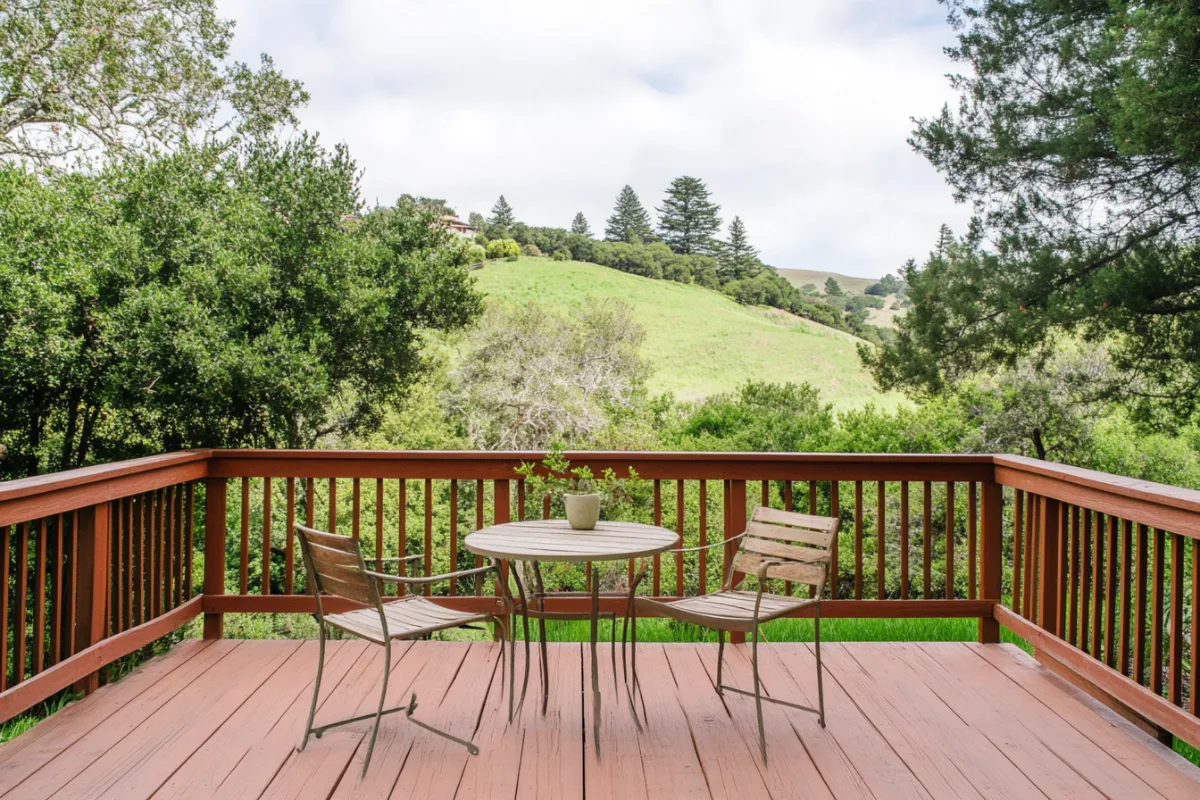
Bare wood doesn't last long outdoors in Marin. On a deck facing the afternoon sun, UV light breaks down the surface fibers and turns redwood and cedar gray within a season or two. On a shaded deck under oaks or redwoods, the problem is the opposite: the boards stay damp, mildew spreads, and the surface gets slick. Fences take the same beating on both sides, often with sprinklers hitting the bottom boards every morning. Around Novato, where summers run hot and dry, decks fade and crack fast. Up in Fairfax, tucked into wooded canyons, moss and mildew are the bigger fight. A good stain job keeps water out of the wood and slows the sun down, and it costs far less than replacing boards later.
Free Estimate

Below, you'll find the signs the wood needs attention, the types of stain and what each one does, how we prep and stain, and how often decks and fences need a fresh coat in Marin. If the house itself is due too, pairing the job with exterior house painting means one round of setup and one schedule. We start with a free look at the wood and a written estimate.
Signs Your Deck or Fence Needs Stain
The simplest test is water. Sprinkle some on the deck boards. If it beads up, the finish is still working. If it soaks in and darkens the wood within a minute or so, the wood is unprotected. Graying is the next sign: it means sunlight has broken down the top layer of fibers. Look for small cracks opening along the grain, splinters on the walking paths, and black or green patches in shady corners. Nail heads that have started to rise and boards that cup or curl at the edges mean the wood has been soaking up water and drying out over and over. On fences, the bottom rails and the boards behind planters usually go first, since they stay wet the longest. Railings matter too: hands and weather wear them down, and rough, splintery railings are the first thing guests notice.
Choosing a Stain: Transparent, Semi-Transparent or Solid
Stains come in a range, from almost clear to nearly as opaque as paint. Transparent and toner stains show the most grain and color of the wood, which makes them popular on newer redwood and cedar, but they carry the least pigment, so they wear fastest in strong sun. Semi-transparent stains add more color while still letting the grain show, and they're the most common choice on Marin decks because they balance looks and protection. Solid stains cover the wood like a thin paint. They hide mismatched or weathered boards and last longer on vertical surfaces like fences, though on a deck floor they can wear through along the paths people walk most. We also look at whether an oil-based or water-based product suits your wood and your exposure better. If you're not sure about color, we can stain a test board so you see it on your own wood before committing.
How We Stain Decks and Fences
Most of the work happens before any stain is opened. We start by clearing the deck and protecting the house siding, plants and anything nearby. Then the wood gets a thorough cleaning with a wood cleaner and a careful wash, enough to lift dirt, mildew and old, failing finish without tearing up the grain. If an old stain is peeling, we strip it first, since new stain won't soak through an old film. A wood brightener restores the color after cleaning. Then the wood has to dry, often for a day or two, because stain applied over damp wood won't penetrate. We sand rough spots, set raised nails, replace popped screws, and then apply the stain board by board so there are no lap marks. Afterward, the deck needs to stay clear of furniture and foot traffic until the stain is dry, and we'll tell you exactly when it's ready.
How Often Decks and Fences Need Restaining
It depends on the stain and on the exposure. Horizontal surfaces wear much faster than vertical ones, because sun and rain hit a deck floor straight on and people walk across it every day. So a deck usually needs fresh stain well before the fence around it does. Transparent stains need the most frequent touch-ups, solid stains the least. Sunny decks in inland Marin wear faster than shaded ones near the coast, but shaded decks need more mildew cleaning between coats. The water test is the best guide: when water stops beading and starts soaking in, it's time. Restaining a little early is cheaper than waiting, since you skip the stripping and heavy sanding that a neglected deck needs. Fences also last longer when sprinklers are aimed away from the boards and plants are trimmed back so air can move around the wood.
Managing a property with long fence lines or shared decks? Our commercial painting work covers HOA common areas and rental properties too.
Common Questions
Usually not right away. New pressure-treated lumber often holds a lot of moisture from the treatment, and it needs time to dry before stain can soak in. Some new boards also have a smooth mill glaze on the surface that blocks stain. We check the wood with a simple water test and, if needed, use a cleaner to open up the surface. New redwood and cedar are usually ready sooner, but the same test applies.
On walking surfaces, we usually recommend stain. Paint forms a film on top of the wood, and on a deck floor that film tends to peel where water gets under it and where people walk most. Once paint peels on a deck, getting it off means heavy scraping or sanding. Railings, posts and trim are a different story, since they don't take foot traffic, and paint can work well there if you want a crisp color.
Yes. Brown-shingle homes are common in Mill Valley and Kentfield, and many cedar shingles were never meant to be painted. A penetrating stain lets the wood breathe and weather evenly, while paint on shingles can trap moisture and peel. We clean the shingles, flag any that are split or loose for repair, and apply a stain in the color you want, from natural cedar tones to a solid color that covers old, uneven weathering.