
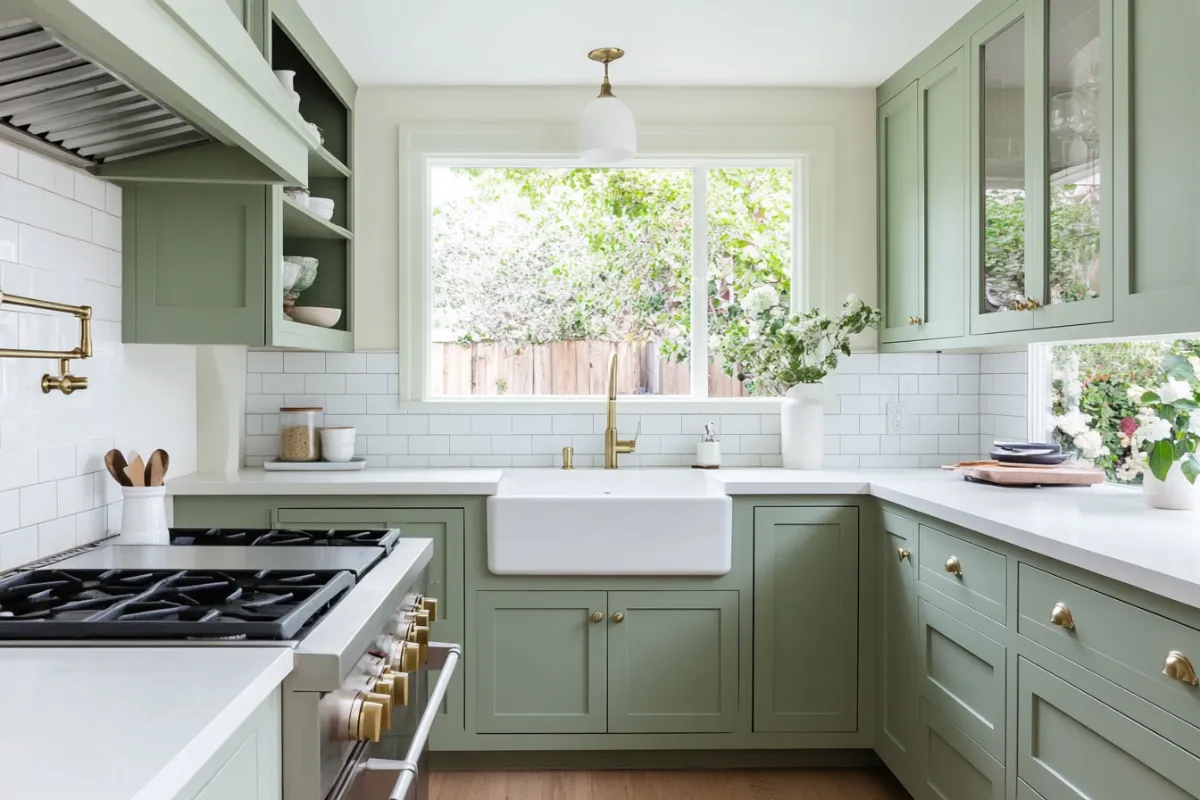
Plenty of Marin kitchens have solid cabinet boxes that are simply dated. Oak cabinets from the 1980s and 90s, orange-toned cherry, or white paint that's yellowed and chipped around the handles. Replacing them means weeks without a kitchen and a big bill, often for cabinets that were built well the first time. Painting changes the whole room for a fraction of that. We see a lot of these jobs in Corte Madera and San Anselmo, where many homes still have their original kitchens. The catch is that cabinets take more abuse than any wall in the house. Hands, steam, grease and cleaning sprays work on the finish every day, so the prep and the paint have to be chosen for that. Painted cabinets are also a common update before a home goes on the market.
Free Estimate
Below, we cover how to tell if your cabinets are good candidates, the primers and enamels that last, our step-by-step process, and how painting compares with refacing or replacing. If the rest of the kitchen needs a refresh too, we can handle the walls and ceiling as part of the same interior painting job. The estimate lists the number of doors and drawers, the finish and the color, and it comes after a free look at your kitchen.
Are Your Cabinets Good Candidates for Paint?
Painting works best on cabinets that are structurally sound. Open and close every door. If the hinges hold, the boxes are square and the doors aren't warped, you're in good shape. Solid wood and wood veneer take paint well once they're properly primed. MDF does too, and it's often the smoothest surface for a painted finish. Thermofoil, the plastic-wrapped style common in the 90s, is a different story: if it's peeling at the edges, paint won't fix it. Laminate can be painted with the right bonding primer, though it needs extra care. Water damage under the sink, swollen door edges or loose face frames should be repaired before we start, or the new finish won't last over them. Not sure what yours are made of? We can tell during the walkthrough.
Primers and Enamels Made for Cabinets
Regular wall paint stays slightly soft, which is fine on a wall and a problem on a door you touch dozens of times a day. Cabinets need an enamel that cures hard. The products most painters rely on now are waterborne alkyd and urethane-modified acrylic enamels. They level out smoothly, resist chips and don't yellow the way older oil paints did. Underneath, a bonding primer is what makes the whole thing stick, since it grips glossy factory finishes that ordinary primer would slide off. On oak, a grain filler can smooth out the open grain if you want a sleek look instead of visible texture. One thing to know: these enamels feel dry within hours but take a few weeks to reach full hardness, so go gently on them at first. Sheen matters here too: satin is the most popular choice, while semi-gloss wipes clean more easily but shows every flaw in the wood.
How We Paint Your Cabinets
We start by protecting the counters, floors and appliances, and you clear out whatever you use day to day. Doors, drawer fronts and hardware come off and get labeled so everything goes back in the same spot. Every surface gets degreased, since kitchen grease is the most common reason cabinet paint fails. Then we sand to dull the old finish, fill dents and holes, and apply the bonding primer. Doors and drawer fronts are usually sprayed for the smoothest finish, while the boxes and face frames are brushed and rolled in place. After the topcoats, the doors go back on with your old hardware or new pieces you've picked, adjusted so they close evenly. If you want soft-close hinges, this is the easy moment to switch.
Painting vs. Refacing vs. Replacing
These three get mixed up, so here's the short version. Painting keeps your existing doors and boxes and changes the color. It costs the least and works well when the cabinets are solid and you like the layout. Refacing replaces the doors and drawer fronts and covers the boxes with new veneer. It changes the door style, not just the color, and costs more. Replacing means new cabinets entirely, the right call when the boxes are damaged or you want a different layout. If you love your kitchen's shape and just dislike the color, painting is almost always the answer. If you want shaker doors where you now have raised panels, refacing may be worth the step up. Painting also leaves everything in place, so there's no demolition, no plumbing work and no counters to pull out.
Own a rental or run an office with a dated kitchen? Our commercial painting work covers those too.
Common Questions
For a typical Marin kitchen, plan on about a week from the first day of prep to the doors going back on, though large kitchens or heavy repairs take longer. Much of that time is primer and paint drying between coats. You can still use the kitchen in a limited way during the job, since the boxes are only off-limits while they're being painted. We'll give you a day-by-day schedule with your estimate.
Yes. Vanities get the same prep and enamel as kitchen cabinets, and they're a smaller job, so they often fit into a kitchen project or an interior repaint. Bathrooms add moisture, so we pay extra attention to the bottom edges of doors and the area around the sink, where water tends to sit. A good exhaust fan helps the finish last, so if yours is weak, we'll mention it during the walkthrough.
Not if the job is done right. Spraying the doors and drawer fronts gives a smooth, factory-like finish with no brush marks. Face frames and boxes are painted in place, and with modern self-leveling enamels and good rollers, the marks flatten out as the paint dries. Oak can still show its grain through paint, which some people like, so if you want a completely smooth look, ask about grain filling during the estimate.